
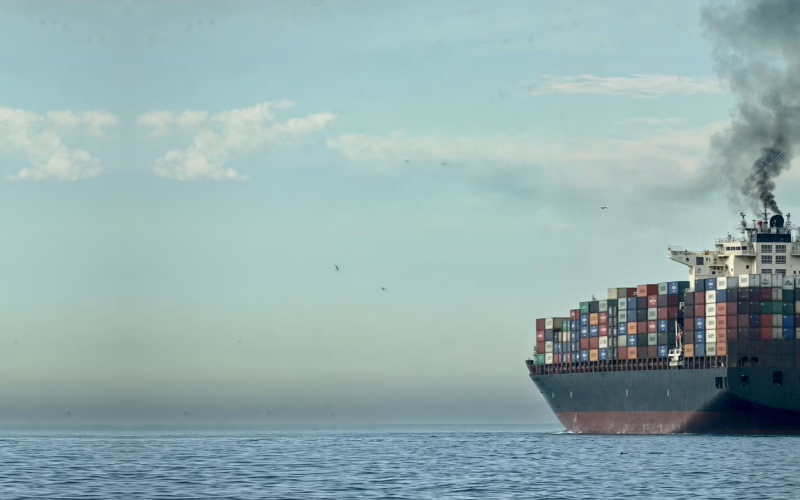
The maritime industry is investing in vessels powered by alternative fuels, including LNG, methanol, ammonia, and hydrogen. This transition is changing not only ship technology but also the skills and experience required from seafarers.
According to Lloyd’s Register, 590 alternative-fuel-capable merchant and leisure vessels were ordered in 2025, bringing the total orderbook to 1,942 ships.
This creates an additional challenge as shipowners must assess whether candidates have the specific competencies and training required for each vessel’s propulsion technology.
The International Maritime Organization (IMO) is responding to these developments by introducing interim training guidelines for seafarers working with alternative fuels and new technologies.
Alternative fuels ships are becoming an increasingly important part of the global maritime fleet. Although conventional fuels still dominate shipping, new vessel orders show that shipowners are investing in a wider range of propulsion technologies.
LNG remains the most established alternative fuel, with 407 LNG-capable vessels ordered in 2025. Methanol followed with 134 orders, reflecting growing interest in another fuel option for commercial shipping. Meanwhile, emerging technologies are developing on a smaller scale, with 13 hydrogen-capable and six ammonia-capable vessels ordered during the same year.
The wider orderbook also illustrates how diverse the future fleet is becoming:
| Alternative fuels | Vessels on order |
| LNG | 1,259 |
| Methanol | 385 |
| LPG | 139 |
| Hydrogen | 53 |
| Ammonia | 45 |
| Biofuels | 22 |
Source: Lloyd’s Register, 2025 alternative fuel vessel order analysis. Figures represent fuel capabilities and are not necessarily mutually exclusive.
These figures highlight the different stages of alternative fuel adoption. While LNG benefits from a more established regulatory and training framework, methanol, ammonia, and hydrogen introduce additional competency requirements.
As new vessels enter service, crew requirements will depend not only on rank and vessel type but also on familiarity with specific fuel systems and their operational requirements.
Operating an alternative fuel ship requires more than understanding a new propulsion system. Each fuel introduces different technical characteristics, operational procedures, and safety risks that seafarers must be prepared to manage.
According to the European Maritime Safety Agency (EMSA) TRAINALTER study, existing maritime training standards do not fully address all the knowledge and practical skills needed for emerging alternative fuels and energy systems. The study identifies additional competency needs across fuel handling, equipment maintenance, bunkering, monitoring, and emergency response.
However, these requirements vary significantly depending on the technology.
LNG: Crews need knowledge of cryogenic systems, gas handling, leak detection, bunkering, and emergency procedures.
Methanol: Its toxicity and flammability require training in safe fuel handling, protective equipment, ventilation, and emergency response.
Ammonia: Its high toxicity makes gas detection, protective equipment, leak management, and evacuation procedures essential.
Hydrogen: Its high flammability and storage requirements demand knowledge of leak detection, ignition prevention, and emergency isolation.
Battery-powered and hybrid-electric systems: These vessels require competencies in high-voltage equipment, battery management, and thermal runaway prevention.
These differences demonstrate why a single approach to alternative fuels training is insufficient. The required competencies depend on the fuel, vessel design, installed equipment, and individual crew member’s responsibilities.
This adds another dimension to candidate evaluation. Beyond checking certificates and previous vessel experience, it becomes increasingly important to establish whether a seafarer has the relevant technical knowledge, practical training, and familiarity with the specific systems they will operate.
As alternative fuel technologies develop, the ability to match crew competencies with vessel-specific requirements will become an important part of safe and effective maritime recruitment.
The transition to alternative fuels ships will affect different maritime positions in different ways. While all crew members need to understand the relevant safety risks, personnel responsible for operating, maintaining, and supervising fuel and energy systems will require more specialised knowledge.
The EMSA TRAINALTER study identifies additional competencies across deck, engineering, electrical, and maintenance functions. These findings highlight several positions where vessel-specific experience and training will become particularly important.
Engineering personnel are among those most directly affected by new propulsion technologies. Their responsibilities involve operating and maintaining fuel supply systems with different technical characteristics and safety requirements.
Depending on the vessel, this may include LNG gas supply and temperature control systems, methanol fuel injection equipment, ammonia leak prevention systems, or hydrogen storage and handling arrangements.
Chief Engineers must also understand how these technologies interact with existing machinery, what maintenance procedures can be performed safely on board, and when specialist support is required.
For recruitment, experience with a particular fuel system may therefore become an important consideration alongside conventional engineering qualifications.
Alternative fuels vessels rely on sophisticated monitoring, automation, and electrical safety systems.
Electro-Technical Officers (ETOs) and electricians may need additional knowledge of gas detection equipment, emergency shutdown systems, hazardous-area electrical installations, and automated fuel controls.
On battery-powered and hybrid-electric vessels, relevant competencies can extend to high-voltage systems, battery management, charging equipment, and electrical fault detection.
These responsibilities make technical familiarity with the vessel’s installed systems particularly relevant when evaluating candidates for electrical positions.
For deck officers, alternative fuels introduce additional considerations in voyage planning, bunkering operations, and emergency preparedness.
Different fuels may require specific bunkering arrangements, safety zones, communication procedures, and emergency response plans. Fuel availability and storage characteristics can also influence voyage planning.
Masters and deck officers must understand the operational limitations of their vessels and ensure that crew members can carry out fuel-related procedures safely.
Consequently, previous experience with the relevant fuel type and bunkering operations may become valuable during recruitment.
The impact is not limited to officers. Engineering ratings involved in routine inspections, machinery operation, and maintenance also need appropriate knowledge of the equipment they work with.
The level of training will depend on each person’s duties. Not every seafarer needs advanced technical knowledge of an alternative fuel system, but everyone must be prepared to respond appropriately to the risks associated with their vessel.
The transition also affects maritime professionals working ashore.
Technical superintendents and fleet managers may need additional knowledge to oversee maintenance, evaluate technical problems, coordinate specialist repairs, and support safe vessel operations.
Equipment manufacturers and specialised service providers can play an important role in transferring knowledge about new systems to both shipboard and shore-based personnel.
These changes do not necessarily create entirely new maritime professions. Instead, they introduce additional specialisations within existing roles.
A qualified engineer may have extensive experience on conventional vessels but limited familiarity with methanol fuel systems. Similarly, an experienced ETO may need additional training before working with a particular battery installation.
This makes it increasingly important for recruitment teams to assess both general maritime qualifications and technology-specific competencies.
As alternative fuel technologies develop, the International Maritime Organization (IMO) is introducing interim training guidelines to help ensure that seafarers have the knowledge and skills needed to operate new fuel and energy systems safely.
However, an important distinction must be made between existing mandatory training requirements and newly introduced interim guidelines.
Seafarers serving on ships subject to the International Code of Safety for Ships Using Gases or Other Low-flashpoint Fuels (IGF Code) are covered by specific training requirements under Regulation V/3 of the STCW Convention. Depending on their duties, personnel must complete approved basic or advanced training.
These requirements provide an established framework for training personnel involved in fuel handling, safety procedures, and the operation of LNG-related systems.
The IMO has also introduced interim training guidelines covering alternative fuels and new technologies:
These guidelines support the development of appropriate training programmes and competency standards for emerging fuel technologies.
Importantly, the publication of an interim guideline does not automatically mean that a new, universally mandatory STCW certificate has been introduced for that fuel.
Further work is also underway on training guidance for hydrogen, LPG, battery-powered vessels, and fuel-cell technologies.
For shipowners and maritime recruitment companies, the evolving regulatory framework makes careful qualification checks increasingly important.
When evaluating candidates for alternative fuel vessels, employers should consider:
Training certificates should also be assessed carefully. A certificate confirming attendance at a fuel-specific course is not necessarily equivalent to an approved STCW Certificate of Proficiency.
The Recruitment Challenge: Experience, Training and Talent Availability
As alternative fuel ships enter service, maritime employers face a growing challenge: finding seafarers who combine established maritime qualifications with the skills needed to operate newer fuel and energy systems.
The difficulty is not necessarily a lack of qualified seafarers overall. Instead, it is the limited opportunity for some candidates to gain practical experience with technologies that are still being introduced across the fleet.
Experience remains an important consideration in maritime recruitment. However, seafarers cannot easily gain hands-on experience with equipment that is installed on relatively few operational vessels.
This is particularly relevant to emerging ammonia and hydrogen propulsion systems, where practical shipboard experience is less established than for LNG.
The EMSA TRAINALTER study identifies limited operational experience and access to specialised training as challenges in preparing seafarers for alternative fuels.
For recruitment teams, this creates a difficult balance. Requiring previous experience with a specific technology may significantly narrow the candidate pool, while relying exclusively on conventional vessel experience may leave important competency gaps.
Training programmes are developing alongside the technologies themselves.
The TRAINALTER research highlights challenges related to the availability of suitable training equipment, experienced instructors, and established competency standards.
Equipment manufacturers and technology providers can therefore play an important role in delivering system-specific training, particularly where practical experience within the existing maritime workforce is limited.
At the same time, the introduction of new IMO training guidelines is helping provide a more consistent basis for developing courses.
Nevertheless, training availability, course content, and practical instruction may differ between providers and technologies.
For employers, verifying a candidate’s qualifications is an essential part of recruitment. However, certificates alone may not provide a complete picture of their readiness to work with a particular fuel system.
For example, a seafarer may have completed a general methanol familiarisation course without having operated a methanol fuel supply system on board.
Similarly, experience with LNG equipment does not automatically demonstrate competence in handling ammonia or hydrogen.
Recruitment assessments should therefore consider the scope of completed training, relevant operational experience, and any additional familiarisation required before deployment.
The growing adoption of alternative-fuel ships is reshaping maritime recruitment and creating new expectations for seafarers. As propulsion technologies evolve, shipowners must look beyond traditional qualifications and consider fuel-specific competencies, practical experience, and specialised training.
This transition creates opportunities for maritime professionals to develop valuable technical skills and adapt to the changing demands of the industry. For employers, it highlights the importance of early workforce planning, targeted training, and careful candidate assessment.
Although alternative fuels will not replace traditional maritime skills, they will influence how crews are selected, trained, and prepared for deployment.
ORCA Crew Services supports shipowners and maritime operators with international crew recruitment and management solutions. As the industry evolves, having access to qualified personnel and reliable recruitment support becomes important.

Fraudsters are contacting candidates and falsely claiming to represent our company. They often demand advance payments to cover the cost of a medical certificate (or similar documents) before joining/embarking on vessels.
ORCA Crew Services NEVER requests any money or advance payments from candidates - whether for medical certificates, processing fees, applications, visas, travel, or any other purpose.
All legitimate recruitment and job offers are handled exclusively through our official channels.
If you receive any suspicious message or request for payment, please do not respond or send money. Instead, report it immediately to us at crewing@orca-crew.com and verify directly via our official website: www.orca-crew.com or job portal: orca-crew.lt
Stay safe and vigilant!