
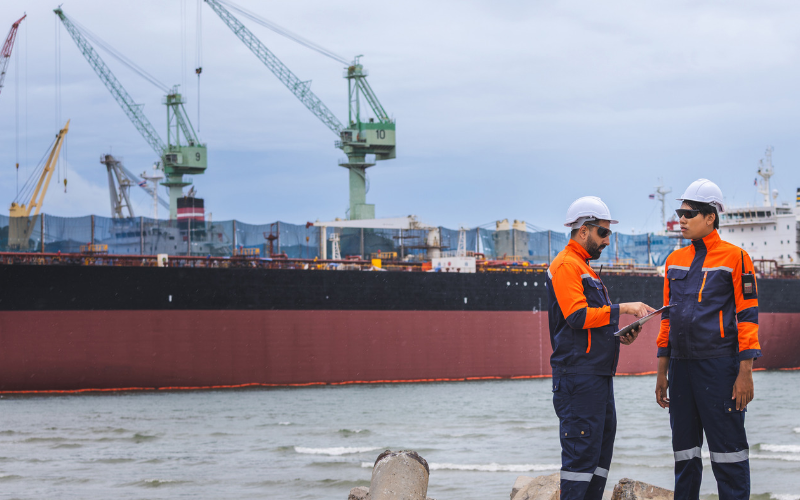
The maritime industry is facing a workforce challenge that goes beyond simply finding enough people to work at sea. As experienced seafarers approach retirement, new technologies reshape onboard responsibilities, and shore-based employers compete for maritime expertise, recruiting qualified crew members is becoming complex.
Recent research highlights this growing complexity. A study published by the UK government, drawing on BIMCO/ICS data and analysis by the Centre for Economics and Business Research (Cebr), forecasts continued demand growth for both officers and ratings through 2035. Meanwhile, the International Maritime Organization (IMO) is introducing new training guidance to prepare seafarers for alternative fuels and emerging technologies, adding another dimension to maritime workforce planning.
According to the BIMCO/ICS Seafarer Workforce Report 2026, the global supply of STCW-certified seafarers is estimated at approximately 2.57 million, compared with demand for 2.55 million. However, this overall balance conceals a significant difference between workforce categories: the industry faces a shortage of 39,100 officers, while the estimated supply of ratings exceeds demand by 56,890.
The shortage of qualified officers has widened considerably. In 2021, BIMCO and ICS estimated a global shortfall of 26,240 officers. By 2026, this had increased to 39,100, despite growth in the number of qualified officers available to the industry.
A separate study commissioned by the UK Department for Transport provides a longer-term perspective. Its modelling indicates that demand for qualified maritime personnel could increasingly exceed available supply within the UK shipping industry.
Under the study’s baseline assumptions, the projected UK workforce shortfall reaches approximately 3,800 officers and 5,100 ratings by 2035. The officer shortage is concentrated primarily in deck, engineering, and technical positions, where specialised qualifications and practical experience are essential.
These projections reflect the UK maritime labour market and should not be interpreted as a forecast of global shortages. Nevertheless, they illustrate how recruitment pressures can differ considerably between countries, vessel segments, and professional categories.
Workforce demand is also changing as ships become increasingly technologically sophisticated. Alternative propulsion systems, digitalised equipment, and more complex regulatory requirements are placing greater emphasis on technical expertise and advanced operational competencies.
The UK projections identify electro-technical and electrical engineering roles as areas where demand pressures may become particularly significant. This suggests that the future seafarer shortage could increasingly be defined by the availability of professionals with specialised skills rather than by overall workforce numbers alone.
Although the seafarer shortage affects different parts of the maritime industry, recruitment challenges are particularly pronounced in positions requiring advanced certifications, extensive sea service, and specialised technical expertise.
The BIMCO/ICS Seafarer Workforce Report 2026 identifies engineering and deck officers among the most difficult personnel categories to recruit. Research commissioned by the UK Department for Transport also highlights recruitment difficulties involving senior officers, electro-technical specialists, and experienced personnel in certain vessel sectors.
Masters, chief officers, and other experienced deck officers are among the maritime professionals facing significant recruitment pressure. These positions demand advanced navigational competence, leadership abilities, regulatory knowledge, and substantial practical experience.
The UK Seafarer Projections 2026 identifies masters and officers of the watch among the roles employers find difficult to recruit. The challenge is particularly relevant to specialised vessel operations, where familiarity with specific equipment, trading environments, and operational requirements can significantly narrow the available candidate pool.
Engineering officers represent another particularly challenging recruitment category. Chief engineers and senior engineering personnel are responsible for maintaining complex propulsion systems, managing technical operations, and ensuring the reliability and safety of onboard machinery.
According to the BIMCO/ICS Seafarer Workforce Report 2026, engineering officers remain among the most difficult maritime professionals to recruit. The UK workforce research similarly identifies chief and senior engineers as positions experiencing recruitment difficulties, including within the towage sector.
The transition towards alternative fuels adds another layer of complexity. Engineering personnel need to understand unfamiliar propulsion technologies, fuel-handling systems, and associated safety procedures.
Electro-technical officers (ETOs) are becoming important as modern vessels rely more heavily on integrated electrical systems, automation, digital monitoring, and sophisticated onboard equipment.
The UK Seafarer Projections 2026 identifies ETOs among the roles employers report difficulty filling. The research also points to growing requirements for electrical and electronic engineering expertise as vessel systems become more technologically complex.
Competition for these skills may extend beyond shipping, as technically qualified professionals can also pursue careers in shore-based engineering and other industrial sectors. This makes the development and retention of experienced ETOs an increasingly important part of maritime recruitment planning.
The maritime energy transition is creating additional competency requirements for seafarers working with emerging propulsion technologies.
In September 2025, the International Maritime Organization issued generic interim training guidelines for seafarers serving on ships using alternative fuels and new technologies. These were followed in July 2026 by fuel-specific interim guidelines covering methyl/ethyl alcohol and ammonia. Further guidance addressing hydrogen, LPG, batteries, and fuel cells remains under development.
The UK workforce study highlights difficulties recruiting experienced masters and chief engineers in towage. Stakeholders identified several contributing factors, including an ageing workforce, employee turnover, and competition from offshore wind and other sectors.
These findings illustrate why the availability of qualified seafarers cannot always be assessed solely by rank or certification. Employers may require professionals with experience operating specific vessel types, working in demanding environments, or performing specialised manoeuvres.
For such positions, the number of candidates with relevant practical experience can be considerably smaller than the overall pool of certified maritime personnel.
The seafarer shortage also has implications beyond positions onboard vessels.
Experienced officers are needed in maritime education, technical management, port operations, and other shore-based functions. These positions frequently depend on professional knowledge acquired through years of service at sea.
The UK Seafarer Projections 2026 identifies recruitment challenges among maritime training providers, particularly when seeking experienced engineering officers. The study also highlights demand for former seafarers in positions such as marine pilots, harbour masters, technical superintendents, and fleet managers.
At the same time, attracting qualified former officers into training and assessment roles is essential for developing the next generation of maritime professionals.
As demand for experienced officers and specialised technical personnel continues to evolve, shipowners need recruitment strategies that support both current operations and long-term workforce development.
Effective workforce planning begins with understanding which positions may become difficult to fill before vacancies arise.
Shipowners can respond by forecasting future crew requirements, identifying positions dependent on experienced personnel, and preparing succession plans for senior officers and technical specialists.
The International Maritime Organization (IMO) is developing training guidance for seafarers working with alternative fuels and new technologies, including methanol, ammonia, and other emerging propulsion systems.
Shipping companies should consider how these developments affect their existing crews and future recruitment needs.
Supporting additional certifications, practical familiarisation, mentoring, and career progression can help employers develop the competencies required for increasingly sophisticated vessels.
ISWAN’s research identifies several factors that can influence seafarers’ willingness to remain in the industry, including workload, fatigue, contract conditions, work-life balance, and onboard wellbeing.
The organisation also recommends reviewing crewing arrangements, improving communication, and ensuring that technological changes do not introduce unnecessary administrative burdens.
For shipowners, practical retention measures may include predictable crew rotations, fair employment conditions, clear career development opportunities, and supportive onboard leadership.
These improvements can help preserve valuable operational experience while making maritime careers more attractive over the long term.
ORCA Crew Services supports shipowners and vessel operators through international maritime recruitment, crew management, documentation coordination, and crew mobilisation.
By combining access to maritime professionals across different markets with structured recruitment processes, ORCA helps clients address crew requirements across a range of vessel types and maritime sectors.
Successful maritime recruitment should not end when a vacancy is filled.
Maintaining relationships with experienced crew members, supporting professional development, and providing opportunities for continued employment can help shipping companies reduce their dependence on repeated recruitment.
This approach is particularly relevant for senior deck officers, engineering personnel, and other specialists whose qualifications and vessel-specific experience can be difficult to replace.
Ultimately, addressing the seafarer shortage requires a combination of forward-looking recruitment, continuous training, and effective retention.
The seafarer shortage is becoming an increasingly complex challenge for the global maritime industry. While overall workforce availability remains important, the greatest recruitment difficulties are concentrated in positions requiring advanced qualifications, extensive sea service, and specialised technical expertise.
Senior deck officers, experienced marine engineers, and electro-technical specialists are among the professionals whose availability will be particularly important in the years ahead. At the same time, alternative fuels, digitalisation, and competition from shore-based maritime careers are changing the skills and experience that shipowners need.
At ORCA Crew Services, we understand the importance of connecting vessel operators with qualified maritime professionals. Through international crew recruitment and crew management solutions, we support shipowners in meeting their workforce requirements across different vessel types and maritime sectors.

Fraudsters are contacting candidates and falsely claiming to represent our company. They often demand advance payments to cover the cost of a medical certificate (or similar documents) before joining/embarking on vessels.
ORCA Crew Services NEVER requests any money or advance payments from candidates - whether for medical certificates, processing fees, applications, visas, travel, or any other purpose.
All legitimate recruitment and job offers are handled exclusively through our official channels.
If you receive any suspicious message or request for payment, please do not respond or send money. Instead, report it immediately to us at crewing@orca-crew.com and verify directly via our official website: www.orca-crew.com or job portal: orca-crew.lt
Stay safe and vigilant!